Define the Audience
Review your campaign goals, audience, locations and timing to guide media selection. Agree on suitable metrics and data collection methods for the format.
Brandstorm plans mobile advertising across Thailand, from in-car digital screens, vehicle wraps and stickers to LED trucks, roadshows and brand activations. We match the media to your audience, locations and budget.
Plan campaigns across Thailand, with media and activities suited to your audience, locations, timing and budget.
Share your brand's goals and the details below so Brandstorm can plan a suitable mobile advertising campaign. If you have not chosen the media or budget yet, let us know where you would like guidance.
Your brand, the product or service you want to promote, the customers you want to reach and your campaign goals.
Your preferred provinces, areas or routes, along with the start date and planned duration for the media or activities.
An overall campaign budget to help define suitable media formats, duration and scope.
Brandstorm turns your brief into a mobile advertising plan, from choosing media and preparing creative to coordinating delivery and reporting. Each campaign is planned around its goals and agreed scope.
Review your campaign goals, audience, locations and timing to guide media selection. Agree on suitable metrics and data collection methods for the format.
Choose the media, key message and desired audience action. Prepare files to the media specifications and obtain client approval before production or display.
Schedule production, installation and media use, coordinating vehicles, staff and venues within the agreed scope. For activations, prepare products, equipment and relevant permissions before launch.
Collect delivery evidence and results against the agreed metrics, using the data each format can provide. Summarise the findings and recommendations for the next campaign.
Brandstorm worked with MotionReach on Pepsi's Songkran campaign, combining fully branded tuk-tuks with free shuttle rides and product sampling. The campaign connected street-level brand visibility with the experience of travelling between event locations.
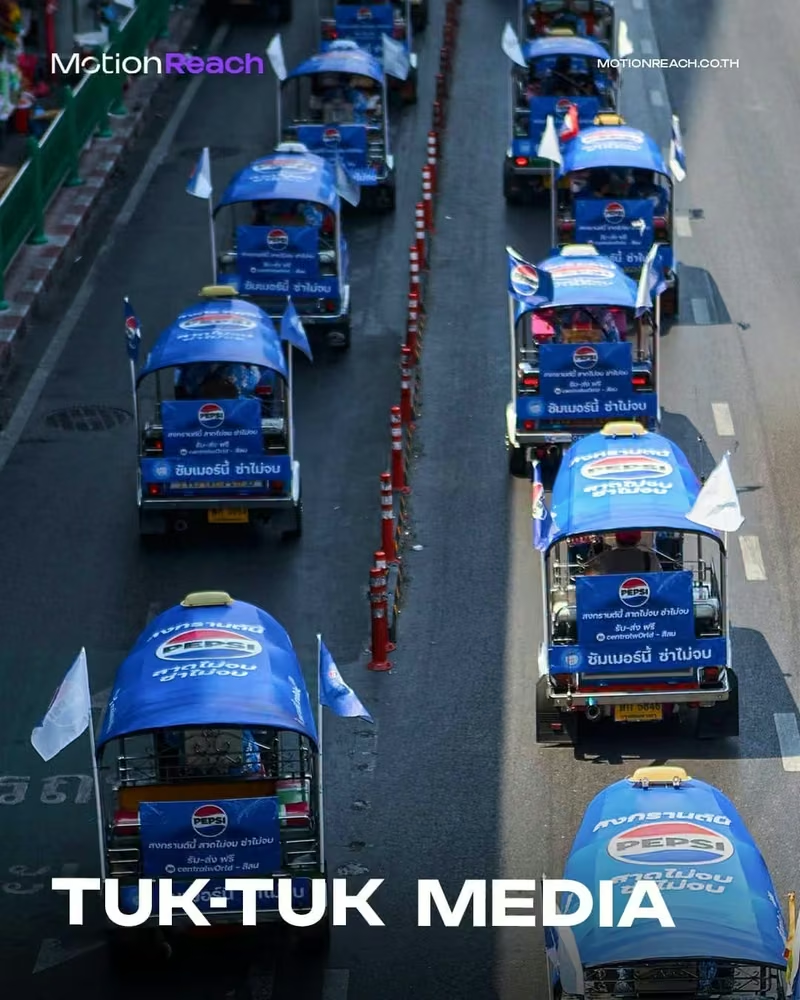
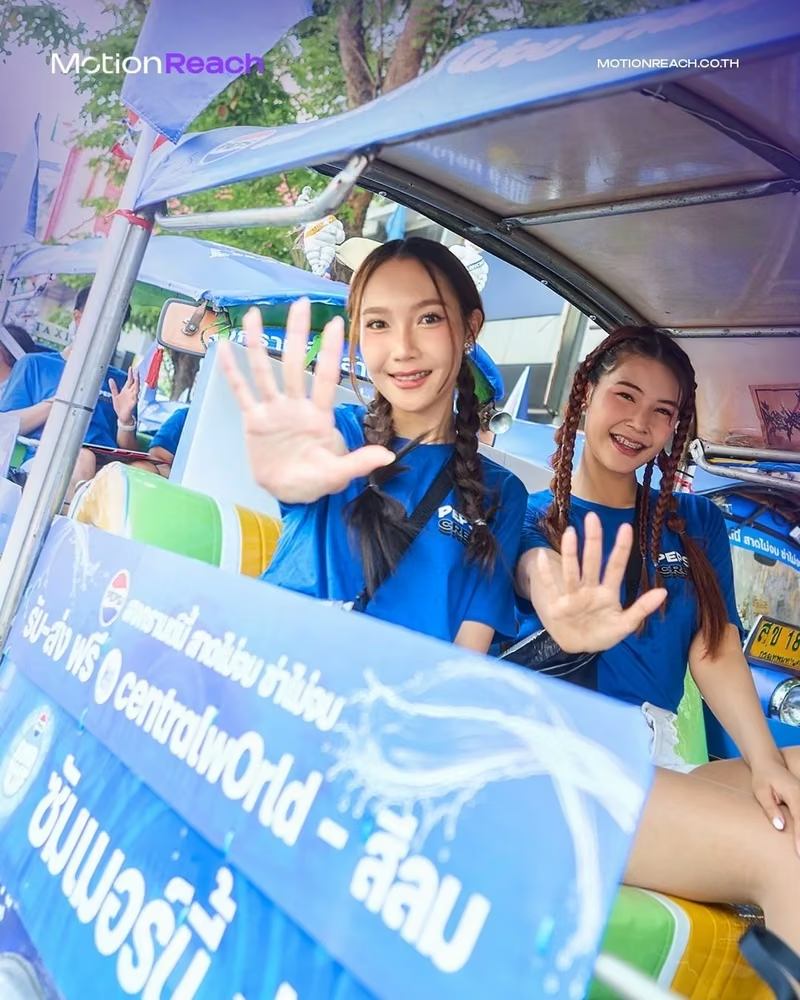
Figures cover the three-day campaign. Impressions are estimates, not unique viewers. Passenger numbers come from the campaign report. These two measures should not be added together or treated as sales.
Agree on metrics and reporting before the campaign begins. Use data appropriate to each format, including delivery evidence, estimated opportunities to see the advertising and audience responses, within the agreed scope.
| Media Format | What Is Reported | How to Read It |
|---|---|---|
| Digital Screens and LED Trucks | Images of the advertising, or logs of playback counts and times, with location data where the system supports it. | Use the available evidence to verify delivery. The number of ad plays is not the number of viewers. |
| Vehicle Wraps and Stickers | Installation photos, vehicle counts and campaign dates, plus estimated opportunities to see the advertising where supporting data and a calculation method are available. | Separate counted data from estimates and state the units, sources and calculation method. Opportunities to see are not unique viewers. |
| Roadshows and Brand Activations | Participant counts, shuttle rides and products distributed, plus QR code scans or enquiries where tracking is available. | Specify the counting units and how repeat activity is handled. Sales attributed to a campaign require purchase data linked to it through the agreed measurement method. |
Budgets depend on the media format, quantity, locations and duration, as well as production and activities. Assess media, production and activation costs separately to clarify the scope and allocate your budget appropriately.
Media costs depend on the format, number of vehicles or screens, target locations and duration. For wraps, specify the vehicle type and coverage area. For digital screens, specify screen count, timing and playback terms. Confirm the locations, routes or operating conditions for the selected format.
Assess design, file preparation, production, installation and quality checks for the chosen format and scope. Clarify whether removal or sticker stripping is included at the end. If creative will change during the campaign, list the additional work and charges in the quotation.
Assess costs for the selected activities, such as on-site staff, samples, shuttle services and permit coordination. Specify the tracking systems and reports required within the scope, and agree on included items and additional work before launch.
Mobile advertising is out-of-home (OOH) media installed or displayed on vehicles, including wraps, stickers, in-car screens and LED trucks. Formats that display ads on digital screens are part of DOOH and can be planned alongside roadshows or brand activations.
It suits product launches, branch promotions, brand awareness and festival or event activities. Consider where your audience is, whether you want to reach passengers or people outside the vehicle, and what you want viewers to do after seeing the ad.
Choose in-car screens to communicate with passengers through video or animation. Choose wraps to show people outside the vehicle clear brand imagery and a message they can understand quickly. Both can work together, with creative suited to the placement and viewing time.
Campaigns can be planned across Thailand. Include your preferred provinces, areas, routes or activity locations in the brief. The team will check media and vehicle availability for your dates and confirm locations, routes and schedules for the selected format before booking.
Costs depend on the format, vehicle or screen count, locations, duration and production or activation scope. Lead times depend on media and artwork availability, design approval, production and installation. Share your intended start date so the team can estimate costs and confirm delivery dates before booking.
Reports depend on the format and agreed scope, such as installation or display photos, playback logs and activation data. Ad plays are not viewer counts. Estimated opportunities to see require supporting data and a calculation method, and must be clearly separated from counted data.
You can combine mobile media with brand activations, sampling or shuttle services and use QR codes to link viewers to an online campaign. Place codes where people have time and can scan comfortably, such as inside vehicles or at activity locations. Agree on tracking and metrics before launch.
Prepare your brand or product details, goals, audience, preferred provinces or areas, start date, duration and budget. Include the formats you are interested in and any image or video files available. If you have not chosen a format, explain what you want people to remember or do next to help shape the plan.
Explore more marketing ideas and campaign planning guidance from Brandstorm.
Read more articles from Brandstorm
Send Brandstorm your brand brief, audience, provinces or areas, campaign dates and budget. We will help plan vehicle media, LED trucks, roadshows or activities around your goals.